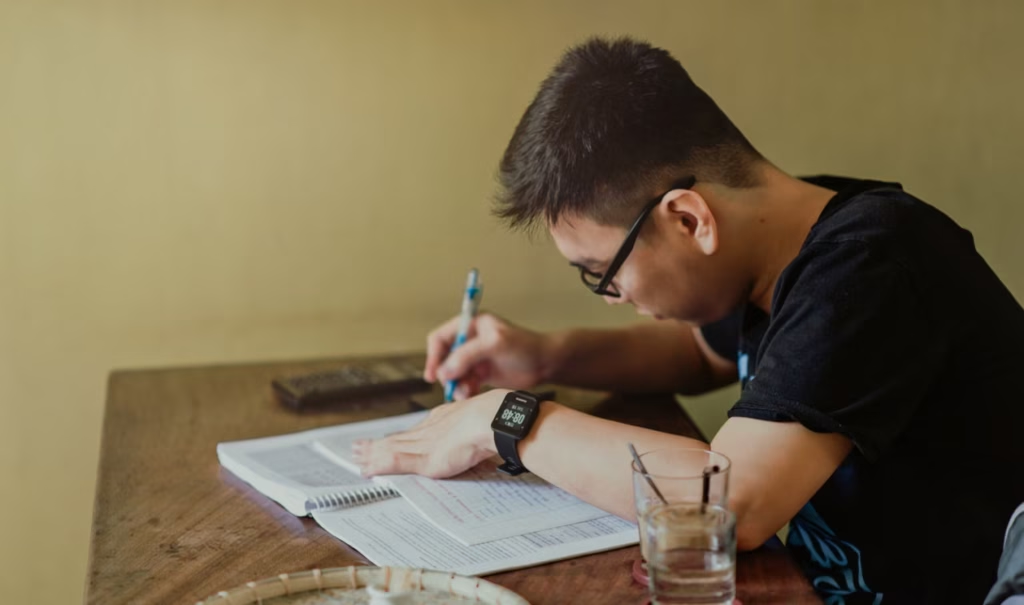
How to Prepare for Competitive Exams at Home
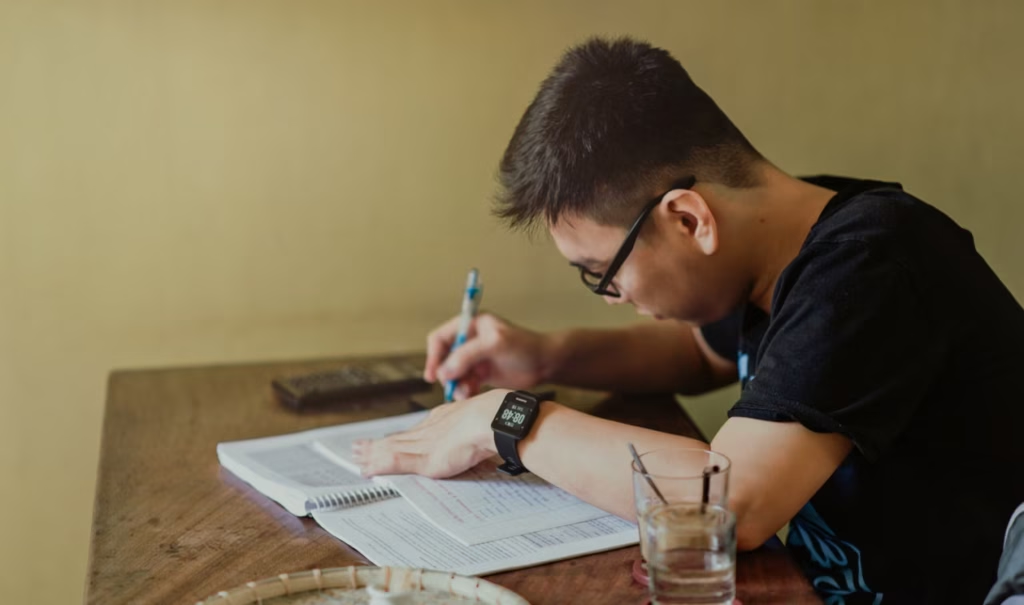
Learn how to prepare for competitive exams at home with proven study strategies, time management tips, expert resources, and a practical study plan.
One of the best strategies for achieving academic and professional objectives is to prepare for competitive tests at home. Studying from home offers flexibility, convenience, and substantial cost savings whether you are preparing for competitive exams such as engineering, medical, banking, government, or university entrance exams.
But reading textbooks is not enough for success. A well-thought-out study strategy, appropriate learning materials, continuous self-discipline, and frequent practice are all necessary.
This thorough tutorial discusses how to use useful strategies to boost your productivity and raise your chances of success when preparing for competitive tests at home.
Why Preparing for Competitive Exams at Home Works
Studying at home provides several advantages when approached correctly.
Benefits of Home Study
- Flexible study schedule
- Comfortable learning environment
- Lower expenses compared to coaching centers
- Personalized learning pace
- More time available for revision
- Easy access to online learning resources
With proper planning, home preparation can be just as effective as classroom coaching.
Create a Realistic Study Plan
One of the biggest reasons students fail is studying without a plan.
Instead of randomly choosing subjects each day, create a structured timetable that covers every topic according to its importance.
A Good Study Plan Should Include
- Daily study goals
- Weekly revision sessions
- Practice test schedule
- Break times
- Mock examination dates
For example:
- 7:00–9:00 AM – Mathematics
- 10:00–12:00 PM – General Knowledge
- 2:00–4:00 PM – English
- 5:00–6:00 PM – Revision
- 8:00–9:00 PM – Practice Questions
Consistency matters more than studying for extremely long hours.
Choose the Right Study Materials
Using quality study resources saves both time and effort.
Your study materials should include:
- Official syllabus
- Standard textbooks
- Previous years’ question papers
- Practice workbooks
- Current affairs magazines
- Online mock tests
Avoid collecting too many books. Master a few reliable resources instead of reading many different ones.
Understand the Exam Pattern
Before starting preparation, carefully analyze the examination.
Focus on:
- Number of sections
- Total marks
- Negative marking
- Time duration
- Weightage of subjects
- Frequently asked topics
Understanding the exam pattern helps you prioritize high-scoring areas.
Build Strong Conceptual Knowledge
Many students memorize answers instead of understanding concepts.
Competitive exams increasingly test analytical thinking and problem-solving skills.
Improve Concepts By
- Reading theory carefully
- Solving examples
- Watching educational videos
- Creating summary notes
- Explaining concepts in your own words
A strong foundation makes difficult questions much easier.
Practice Previous Years’ Papers
Previous question papers are among the most valuable preparation resources.
Benefits include:
- Understanding question trends
- Identifying repeated topics
- Improving speed
- Building confidence
- Learning time management
Aim to solve at least the last five to ten years of question papers.
Take Regular Mock Tests
Mock tests simulate the actual examination.
Advantages
- Identify weak subjects
- Improve accuracy
- Reduce exam anxiety
- Increase speed
- Learn effective time management
After every mock test, carefully analyze your mistakes and avoid repeating them.
Improve Time Management Skills
Time management plays a major role in competitive exam success.
Tips
- Study difficult subjects during your most productive hours.
- Follow the Pomodoro Technique (25–50 minutes of study followed by a short break).
- Avoid multitasking.
- Limit social media usage.
- Complete daily targets before relaxing.
Even three focused study hours are often more productive than eight distracted hours.
Make Short Notes for Revision
Revision becomes easier when you create concise notes while studying.
Your notes should include:
- Important formulas
- Definitions
- Dates
- Diagrams
- Short tricks
- Key concepts
These notes are especially useful during the final weeks before the exam.
Stay Consistent and Motivated
Motivation naturally rises and falls, but consistency is what leads to results.
Stay Motivated By
- Setting weekly goals
- Tracking progress
- Celebrating small achievements
- Studying with a friend online
- Taking short breaks
- Maintaining a positive mindset
Remember that daily improvement adds up over time.
Maintain a Healthy Lifestyle
Your brain performs best when your body is healthy.
Healthy Habits
- Sleep 7–8 hours every night.
- Drink enough water.
- Eat balanced meals.
- Exercise for at least 30 minutes daily.
- Reduce excessive caffeine intake.
- Practice meditation or deep breathing if you feel stressed.
A healthy routine improves concentration and memory.
Avoid Common Mistakes
Many students unknowingly reduce their chances of success.
Avoid these mistakes:
- Studying without a timetable
- Ignoring revision
- Using too many books
- Skipping mock tests
- Comparing yourself with others
- Procrastinating
- Sleeping too little
- Studying continuously without breaks
Small improvements in daily habits often produce better results than drastic changes.
Best Online Resources for Competitive Exam Preparation
Reliable online resources can supplement your study plan.
Useful platforms include:
- Government examination websites for official notifications and syllabi
- Educational YouTube channels for concept explanations
- Free mock test platforms
- Online current affairs portals
- Digital libraries and e-learning websites
Always rely on official sources for exam notifications and syllabus updates.
Final Tips for Success
Before your examination:
- Revise short notes daily.
- Focus on weak topics.
- Solve full-length mock papers.
- Stay calm and confident.
- Avoid learning completely new topics at the last minute.
- Keep all required documents ready before exam day.
Success in competitive exams is not about studying the longest—it is about studying consistently and smartly.
conclusion
With the correct approach, commitment, and consistent practice, it is completely possible to prepare for competitive tests at home. You can maximize your performance and approach the exam with confidence by making a well-organized study plan, employing high-quality study materials, practicing past years’ papers, taking practice exams, and leading a healthy lifestyle.
Keep in mind that regular daily effort yields greater results than sporadic intense study sessions. Continue to improve your preparation, stay focused on your objectives, and evaluate your progress on a regular basis. You can pass your competitive exam and advance toward your academic or career goals with perseverance and astute preparation.
FAQs, or frequently asked questions
- Can I study at home without a coach for competitive exams?
Indeed. By using dependable learning resources, performing mock exams, and adhering to an organized study strategy, many students are able to pass competitive exams on their own.
- How long should I spend studying each day?
Four to eight hours a day of concentrated study is beneficial for most students. In general, consistency and quality are more significant than the sheer amount of hours.
- How should one prepare for competitive exams?
To strengthen your comprehension, make brief notes, go over key concepts on a regular basis, complete past years’ exam questions, and take practice exams.